Palazzo Borromeo, Italy

Palazzo Borromeo, Italy

It is a magnificent palace located on Lake Maggiore in northern Italy. It is the property of the Borromeo family, renowned for its exquisite architecture and rich art collection. Built in the 17th century, designed by renowned architects and designers including Carlo Belloto and Pietro Massajo. The architectural style embodies the luxury and delicacy of the Baroque period, with interior decorations including murals, tapestries, sculptures, and precious artworks. Not only is it the private residence of the Borromeo family, but it is also a treasure trove of art and culture, attracting thousands of visitors every year. Tourists can get a glimpse of the history of the Borromeo family and their love for art.
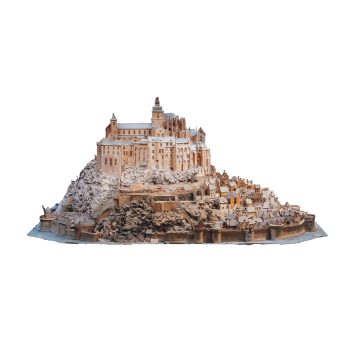
Mont Saint Michel, Normandy, France

Mont Saint Michel, Normandy, France

It is an iconic historical landmark in the Normandy region of France, located on a rocky island about 1 kilometer from the coast. Renowned for its unique natural landscapes and rich historical and cultural heritage, it has been listed as a World Cultural Heritage Site by UNESCO. The history can be traced back to the 8th century when a monastery was built on the island, which later developed into an important religious center. The monastery complex on the island includes Romanesque, Gothic, and Renaissance architectural styles, and is an outstanding representative in the history of French architecture. Mont Saint Michel is not only a destination for religious pilgrimage, but also an important location for military defense.
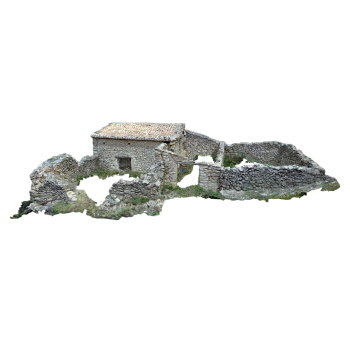
Model of Montserrat Palace in Spain

Model of Montserrat Palace in Spain

It is a historic architectural complex located in the Montserrat Mountains near Barcelona, Spain. Located on a picturesque mountaintop, overlooking the surrounding countryside and the distant Mediterranean Sea. The history can be traced back to the Middle Ages, initially as a monastery, which was later converted into a palace in the 19th century. The name comes from the patron saint of Catalonia, Saint Montserrat, which is not only a religious holy site but also a center of art and culture. The architectural style combines Gothic and Baroque elements. There is also a museum showcasing art works from ancient to modern times, including paintings, sculptures, and ceramics.
Saint Pierre Church in France

Saint Pierre Church in France

It is a Gothic building located in the Pyr é n é es department in eastern France, with a history dating back to the 17th century. It is a Gothic building located in the Pyr é n é es department in eastern France, with a history dating back to the 17th century. Construction began in 1606 and was not completed until 1696, replacing a smaller Romanesque church. The bell tower retains the Romanesque style, while the main building showcases the Gothic style of the 17th century. The interior decoration is magnificent, featuring a rich collection of artistic works and religious relics, including a large Baroque altar created by Catalan sculptor Joseph Sunier in 1699.
Old style ATM machine on the street (3D scanned street view)

Old style ATM machine on the street (3D scanned street view)

Spanish Xihong Street Bar (3D Scanning Street View)

Spanish Xihong Street Bar (3D Scanning Street View)

Shinjuku Old Commercial Street Houses (3D Scanning Street View)

Shinjuku Old Commercial Street Houses (3D Scanning Street View)

Spanish Xihong Street Convenience Store (3D scanned street view)

Spanish Xihong Street Convenience Store (3D scanned street view)

A brand new architectural complex (3D scanned street view)

A brand new architectural complex (3D scanned street view)

Brand new three story villa (3D scanned street view)

Brand new three story villa (3D scanned street view)

Old town restaurant (3D scanned street view)

Old town restaurant (3D scanned street view)

Houses in the old town of Spain (3D scanned street view)

Houses in the old town of Spain (3D scanned street view)

Kioto restaurant and surrounding houses (3D scanned street view)

Kioto restaurant and surrounding houses (3D scanned street view)

Shinjuku Fresh Restaurant (3D Scanning Street View)

Shinjuku Fresh Restaurant (3D Scanning Street View)

Three restaurants in Shinjuku (3D scanned street view)

Three restaurants in Shinjuku (3D scanned street view)

Gas meter on the wall (3D scanned street view)

Gas meter on the wall (3D scanned street view)

Shinjuku Soho Bar (3D scanned street view)

Shinjuku Soho Bar (3D scanned street view)

Gas meter on Japanese street view wall (3D scanned street view)

Gas meter on Japanese street view wall (3D scanned street view)

Old style restaurant in Xihong Street View, Spain (3D scanned street view)

Old style restaurant in Xihong Street View, Spain (3D scanned street view)

Shinjuku 3-chome Bar (3D scanned street view)

Shinjuku 3-chome Bar (3D scanned street view)

American countryside villa

American countryside villa

The Canadian Government Building

The Canadian Government Building

It is the administrative center of the Canadian federal government, located in the capital city of Ottawa. The most famous of these is the Parliament Building on Capitol Hill, which is a symbol of the Canadian government and the center of national political activities. The Capitol Building consists of three Gothic buildings: the Peace Tower in the center, and the chambers of the House of Representatives and Senate on both sides. In addition to the Parliament Building, the Canadian government also owns other office buildings located throughout the country for the operation of different government departments. These buildings not only carry the administrative functions of the government, but are also an important part of Canadian history and culture.
Light luxury small villa

Light luxury small villa

nursery

nursery

It is an institution dedicated to providing round the clock care and early education services for young children. Usually composed of professional caregivers and educators, it aims to provide a safe, healthy, and educational environment for busy parents, allowing children to learn and grow through play and interaction. Environmental design takes into account the physiological and psychological needs of young children, usually equipped with toys, furniture, and activity spaces that are suitable for children's sizes. Educational activities include music, art, sports, and language development, aimed at promoting the development of children's social skills, creativity, and cognitive abilities. Ensure that children can thrive in a suitable environment.
1 2 3 4 5 6 7 8 9 ... 15 Next